Building the Next Great Sports Dynasty, One Agent at a Time
Agents are everywhere, and everyone wants to know how you'd manage a whole team of them. What if you organized them like a sports team?
Before long, "I'll have my agent call your agent" won't just be a phrase reserved for Hollywood, but a daily phrase we use in our jobs. You can't go 24 hours without seeing the phrase "AI agents" pop up. Finance agents, legal agents, coding agents, you name it, there's an agent for it.
Somewhere between all the product announcements and LinkedIn posts, agents went from something just engineers were building to something that all of us were supposed to be asking about:
"Have you built an agent yet?"
"How many agents do you have at your job?"
"How many Mac Minis do you own?"
So what actually is an agent? The answer depends on who you ask, but it typically boils down to something along the lines of how MIT researchers put it:
An autonomous software system that perceives, reasons, and acts in digital environments to achieve goals on behalf of human principals.
In other words, it's a system that can use software, spend money, retrieve data, book flights if you let it, and collaborate with other agents.
For the past few months there's been a new headline about agents every week, and it's moving in every direction at once. Internally, McKinsey rolled out 25,000 to its own workforce. Operationally, FedEx is building "an army of AI agents" across its logistics network. And now companies like MasterCard are packaging agent services for small businesses that can't afford a full finance team.
A few weeks ago, I went down to the Amazon Web Services (AWS) Summit here in Washington, DC to learn a little bit more about what exactly is going on with this agentic stuff. I attended a few sessions on how agents are being built (albeit specifically on AWS), and it was interesting to see what people are building and learn more about the technology that sits underneath all these agents.
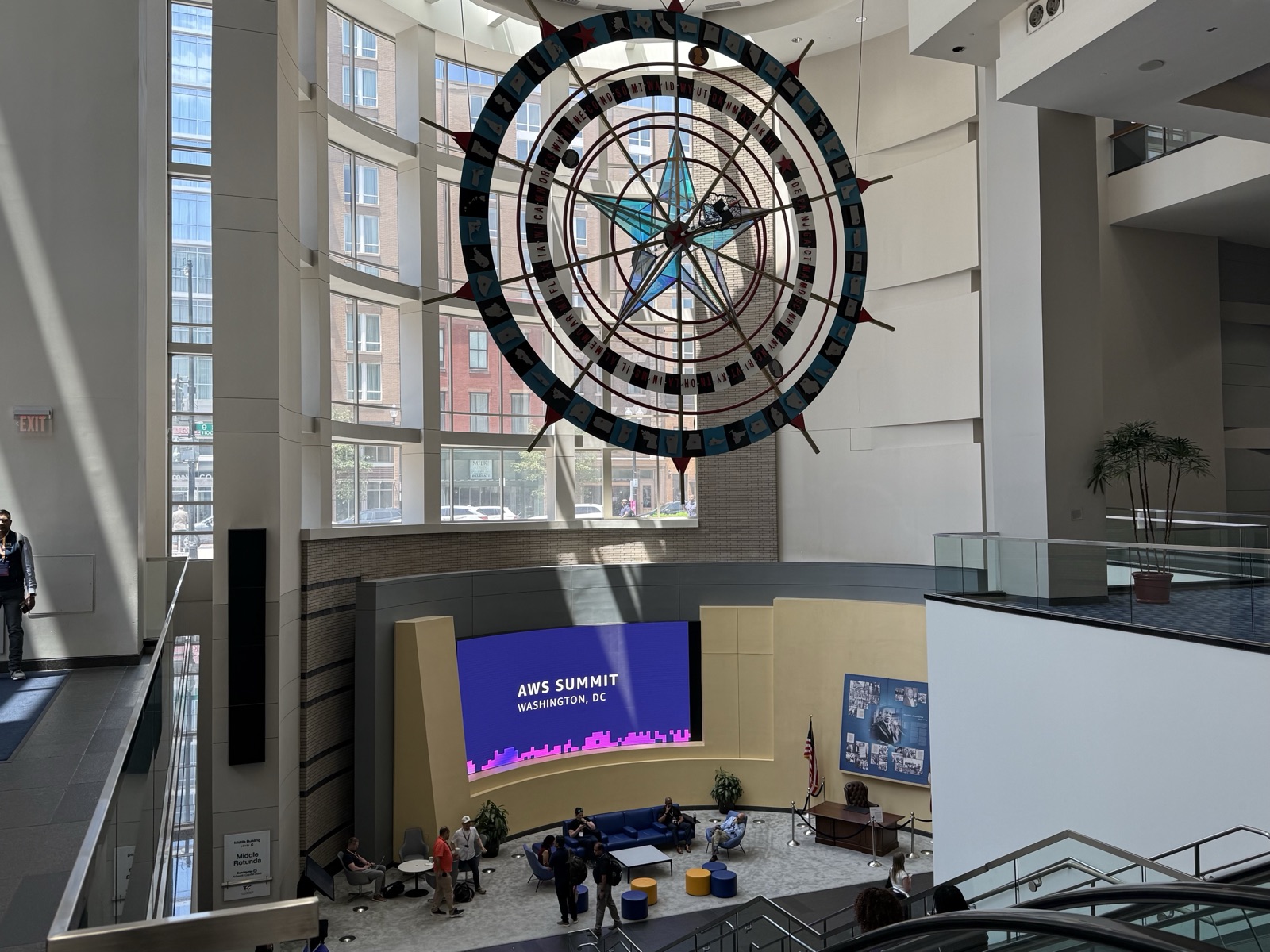
The AWS Summit in Washington, DC.
One thing I noticed across the sessions I attended was that there are a lot of different use cases for agents, and companies are leveraging them in very different ways. Even the PGA is using agents to make sure all player info, statistics, and articles are updated to their player profiles during and after tournaments.
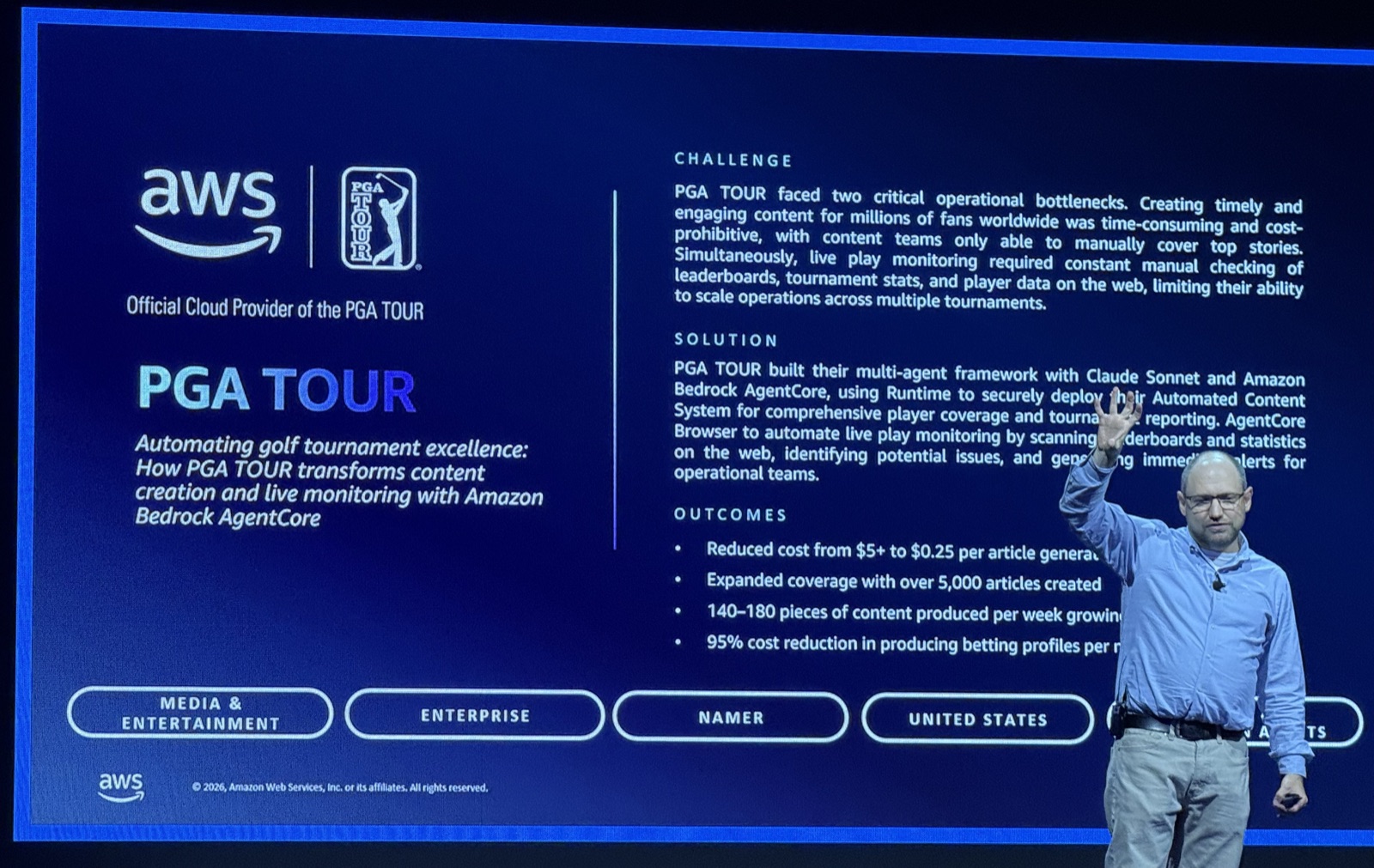
"From demo to deployment: solving agentic AI's toughest challenges" session at AWS Summit DC
Now I've built a few myself (Notion agents count, claiming that as a win). But the more agentic cycles and systems graphics I saw, the more one question kept coming up: if we're about to unleash thousands of agents into companies, and even our everyday applications, how do you begin to orchestrate that?
One of the days I attended AWS Summit, the news broke that the Boston Celtics were trading former NBA Finals MVP Jaylen Brown to the Philadelphia 76ers for Paul George and picks. I can still hear the guy behind me on an escalator in the DC Convention Center, whose friend I can only imagine just informed him of the trade, on the phone saying "No f**king way, bro. That's diabolical. No way this is happening."
This news got me thinking about a lot of things:
- The city of Boston cannot be happy with Celtics GM Brad Stevens.
- I think I agree with the guy on the escalator?
- If they're healthy, Philly might be building an even more competitive team.
But that last point on building a team also got me thinking. What if we visualized how to organize agents like a sports team? As MIT put it, agents act in environments to achieve goals, which is also what sports teams do. But you have team sports and solo sports, and sports that lend themselves to specialists versus generalists. So, I started thinking about agents like athletes, and how organized sports might offer a way to think about how agents can be organized in different lines of work.
The Football Model: Built for Specialization
American football is different from a lot of sports in that it is heavily oriented around specialization. Offensive players play offense, defensive players play defense, special teams stay special teaming.
It doesn't mean players never cross over. Linemen are utilized for special teams, and every few years someone like Deion Sanders or Travis Hunter reminds everyone that two-way football is possible. But those are the exceptions, not the standard. Nobody's asking the kicker to play cornerback, the quarterback isn't being asked to play middle linebacker.
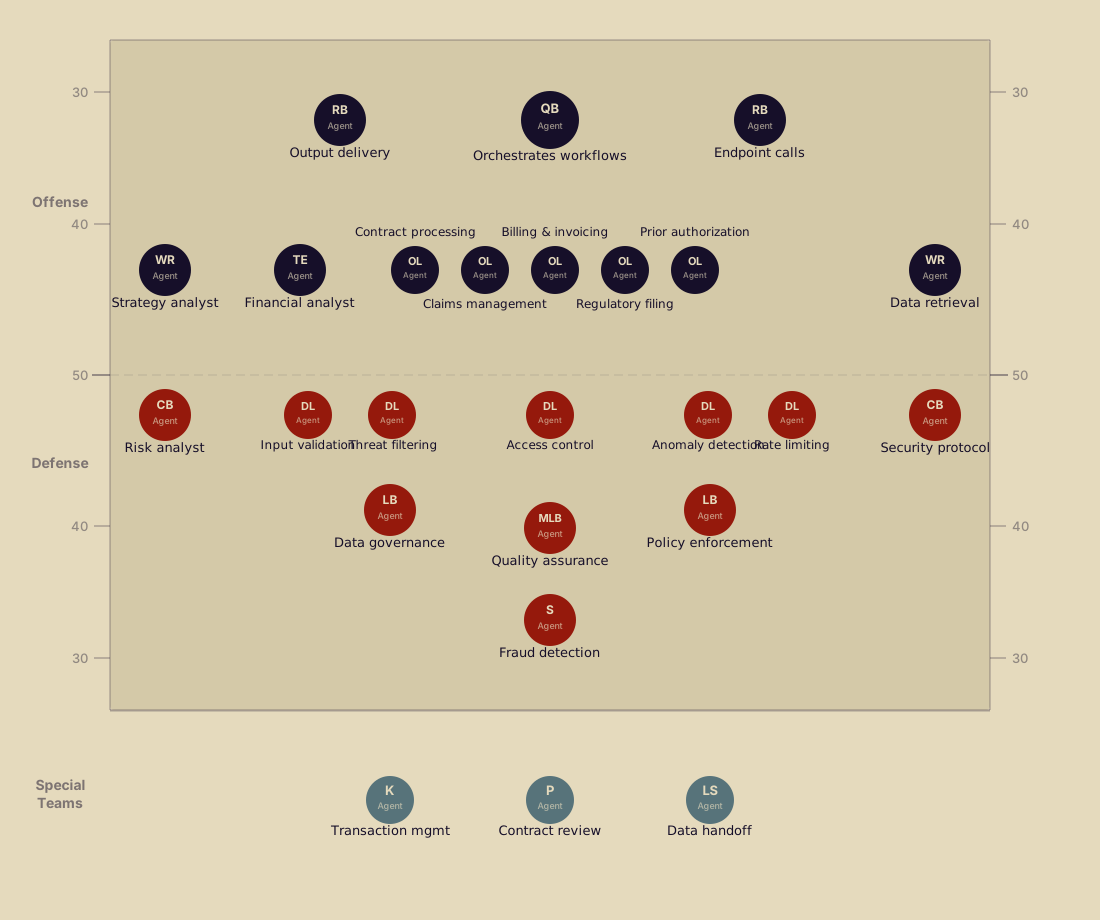
The football model: specialization by design. Each agent stays in its lane. The same reason you don't want your billing agent near clinical decision-making.
That same logic could show up in highly regulated industries like healthcare, legal, and financial services. In these environments, you're likely not building one agent to handle everything. You're building a billing agent, a compliance monitoring agent, or a clinical documentation agent. Each one built for its own lane, none of which are asked to play outside of its position.
The specialization isn't just for efficiency, it's oftentimes about risk as well. For the same reason you don't want your kicker trying to make tackles (though sometimes they can level dudes), is the same reason you don't want your billing agent near clinical decision-making. Walls between roles exist for a reason, to make sure decisions don't get mixed up.
The Basketball Model: Quick Switches
Picture a fast break turnover in basketball. One second your team has possession, pushing up the court looking to score. The next, someone botches the pass and the other team steals possession, and you're sprinting back to play defense. This scenario applies to hockey or soccer as well, but they all share a fundamental characteristic. It's not how many players are on the field, court, or ice, it's that offense and defense aren't separate identities. They're modes.
This isn't to say that there aren't still specializations. In basketball you still have 3-point sharpshooters, rebounding centers, shot-blockers built for one specific job. But even the most specialized player on the court has to get back on defense when the other team has the ball. Broader responsibility, faster switching, less room to specialize your way out of a situation.
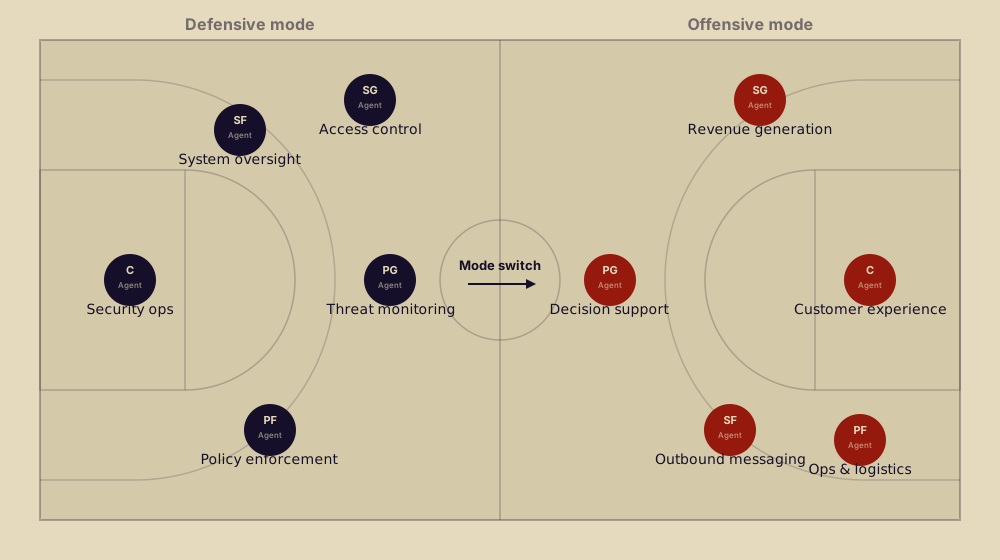
The basketball model: same agents, two modes. The mode switch is the whole point. Context changes, the roster doesn't.
The real-world value of this could show up anywhere work doesn't arrive in neat, pre-sorted categories. A field technician, for example, may need help running diagnostics on a piece of equipment and then they need to know if the replacement part is even in inventory. Those aren't the same task, but they're taking place at the same moment. An agent in this scenario could be built to switch between the two without losing context, not just to handle one thing.
The same could apply to retail and logistics operations. An employee could look to an agent to help handle a customer inquiry and then ask it to run inventory management before the conversation ends. The ability to switch fast, without losing the thread or the context, is where a model like this could thrive.
The NASCAR Model: Even Agents Need a Pit Stop
Not all sports are team sports. If we think about NASCAR it's one driver, one car, one race. Hop in, hit the gas, navigate through the field, and aim for the checkered flag. If you ain't first, you're last. Tennis (aside from doubles) and golf are similar: just one player carrying the full responsibility of the match, making every decision, and adjusting in real time.
There are obvious advantages of solo sports like no coordination overhead, no friction with teammates pulling in different directions, no waiting on anyone. The same applies to agents built to handle large workflows, one place that navigates the work and makes split-second decisions unimpeded.
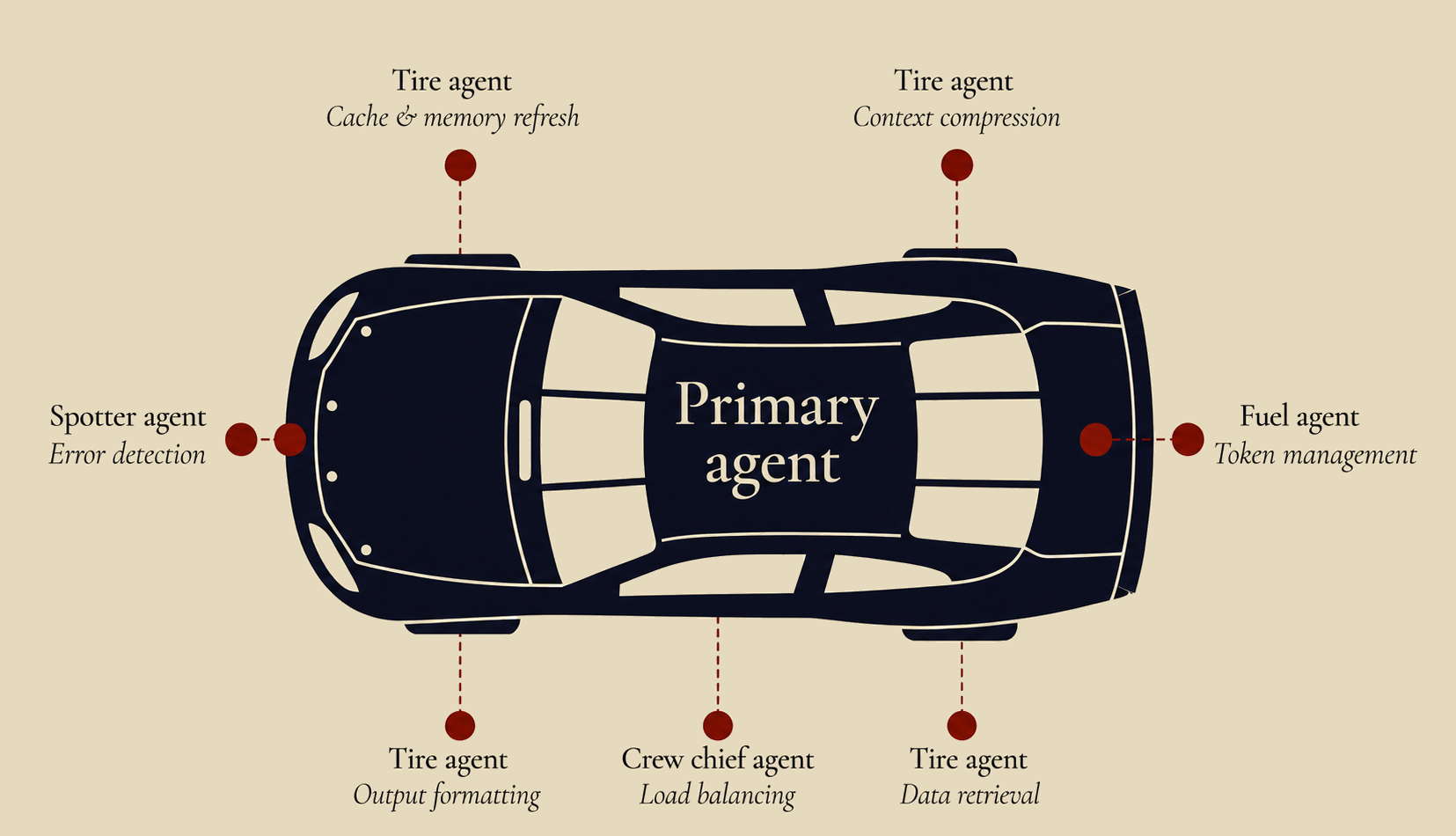
The NASCAR model: one primary agent running the race, specialist sub-agents on call. Even the most capable single-agent setup has a ceiling. That's what the pit crew is for.
But even in these sports, individual athletes (that's right, NASCAR drivers are athletes) have a ceiling. Pressure mounts, fatigue sets in, and there's no one to tag in. At a certain point the rising workload not only slows you down, it starts working against you. Just like a golfer needs a caddy to read a green, a driver needs a pit crew keeping the car in the race. Even an agent needs a pit stop.
You may have already seen this in action. Type something complex into your frontier model of choice and the thinking trail sometimes quietly hands a piece of the work off to another sub-agent mid-stream, while the primary one keeps moving. That's the "pit crew" doing its job.
It's also why this model can align naturally with knowledge work. For example, a consultant may ask an agent to do deep research on an industry, analyze some data, pull the right tools, and format a final report. The problem is that it ends up being four separate requests. That's where specialist agents can be on call for when the primary hits the wall it was going to hit eventually.
These three models don't cover every line of work or every way agents are being deployed right now. But they're a way to start thinking about agentic system structures before you're in the middle of a conversation that assumes you already have one.
Which brings us to the one role that doesn't show up in any of the diagrams: the coach.
Every model we've talked about still needs someone calling plays, deciding which roster fits the work, noticing when the kicker is being asked to play cornerback, or finding the gaps where the human touch is still the right call.
The Stanford Social and Language Technology Lab (SALT) has some research that actually maps this out pretty cleanly. Across the occupations they studied, about 45% of tasks landed at HAS Level 3, where humans and agents collaborate closely throughout the work. Workers aren't just worried about being replaced. They're signaling they want to stay in the loop.
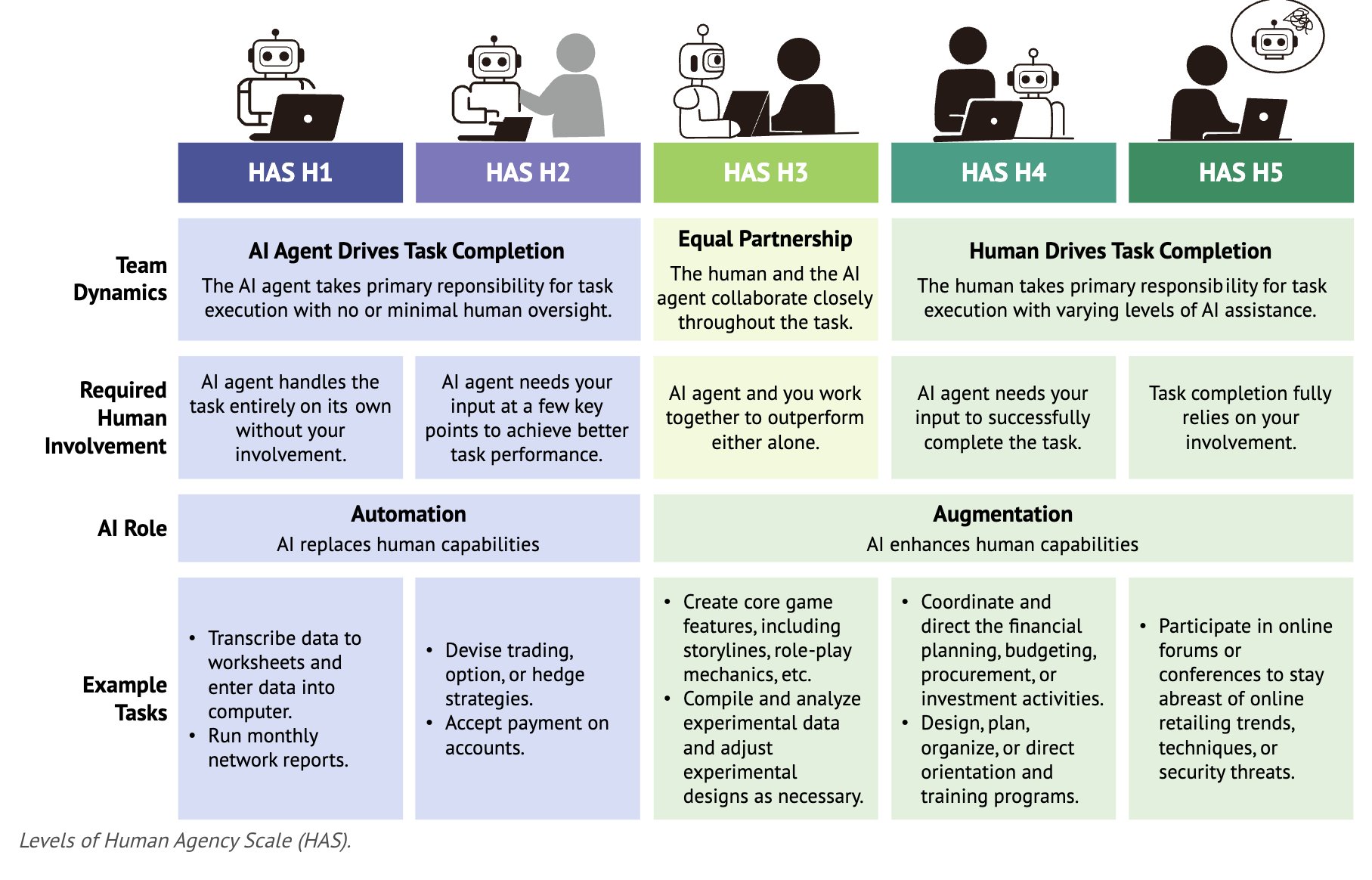
Source: Stanford Social and Language Technology (SALT) Lab, Future of Work research. Levels of Human Agency Scale (HAS).
So in the short term, that's where we come in. Not as agents doing the work, but as the people deciding how the work gets done. We figure out which roster fits the problem, when to call a timeout, and when to bring agents in for a pit stop.
Next time someone asks how you're thinking about agent deployment (or even how you're thinking about building a personal agent), try thinking about it like your favorite sport. Are you building a football team or a basketball squad? Do you need a pit crew or just a good caddy?
The answers won't always come from the technology. They'll come from understanding the work well enough to know which sport you're actually playing.
Tags: AI / Agents, Future of Work

